
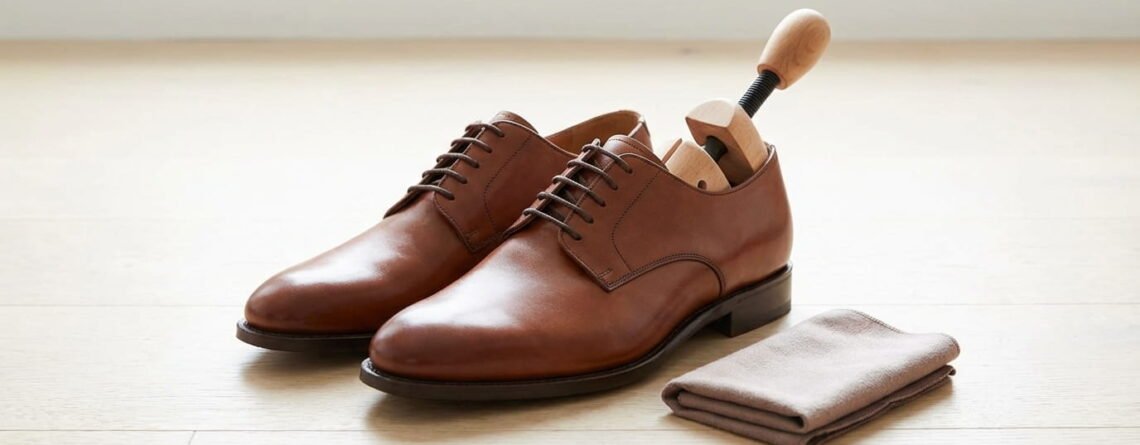
You’ve just bought a quality pair of leather shoes — and wearing them for the first time leaves you with sore heels, pinched toes, or blisters you weren’t expecting. This is completely normal. Almost every pair of genuine leather shoes goes through a break-in period, and understanding why it happens — and how to speed up the process safely — saves you a lot of unnecessary pain. Here’s everything you need to know.
Why New Leather Shoes Hurt in the First Place
Real leather is a dense, natural material. In a brand-new pair of leather shoes, the leather hasn’t had any time to soften, flex, or adjust to the shape of your foot. It’s stiff, rigid, and shaped to a generic last — a foot-shaped mold — not to the specific contours of your individual foot.
Your foot, on the other hand, has a very specific shape. Your heel width, arch height, toe box width, and instep depth are unique to you. When a stiff leather shoe meets your foot for the first time, the areas where your foot pushes against the leather cause friction — and that friction causes pain, pressure, and blisters.
The good news is that real leather is also flexible and responsive. Over time and with wear, the leather gradually softens and molds to the exact shape of your foot. The break-in period is temporary. The result — a shoe that fits like it was made specifically for you — is permanent.
The Most Common Pain Points — and Why They Happen
Heel Blisters and Rubbing
🔴 Most CommonThe heel is the most frequent source of pain in new leather shoes. The back of the shoe — called the heel counter — is typically stiff and structured to hold the heel in place and support the shoe’s shape. When the heel counter hasn’t softened yet, it rubs against the back of your heel with every step, creating friction that leads to painful blisters very quickly.
This is especially noticeable in the first few hours of wear. The heel counter softens significantly with wear and becomes much more comfortable once the leather has flexed and adapted to your heel shape.
Pinching or Pressure Across the Toe Box
🔴 Very CommonThe toe box — the front of the shoe that houses your toes — can feel tight and pinching in new leather shoes, especially if the shoe has a narrower or more tapered toe shape. The leather hasn’t softened enough yet to expand around your toes, and the result is a squeezing sensation that gets worse the longer you wear the shoes.
Some toe box tightness is normal and will ease with wear. However, if your toes are curling, going numb, or the shoe is clearly too narrow for your foot width, the shoe may be the wrong fit rather than just needing a break-in period.
Pressure on the Instep or Top of the Foot
🔴 CommonIf you have a higher instep than average, the tongue and throat of the shoe can press down uncomfortably on the top of your foot. The leather in this area hasn’t yet softened enough to accommodate the height of your instep, creating a concentrated pressure point that can feel bruising after extended wear.
This typically improves as the tongue softens with wear. For people with consistently high insteps, a Derby shoe — with its open lacing that allows more adjustment — is more comfortable than an Oxford’s closed lacing system.
Aching Ball of the Foot
🔴 Common in Hard-Soled ShoesLeather-soled dress shoes have very little cushioning compared to modern athletic shoes. If you’re used to wearing soft-soled shoes or trainers, the transition to a rigid leather sole can leave the ball of your foot aching after a few hours. The sole flexes very little at first, which forces your foot to work harder with every step.
This improves as the leather sole wears in and develops more flex at the natural break point of the shoe — the ball of the foot. A leather insole also softens and molds to your foot’s arch over time, adding comfort that increases the more you wear the shoes.
Tightness Around the Sides of the Foot
🟡 May Indicate Wrong FitSome side tightness is normal in new leather shoes and will ease as the leather stretches slightly across the widest part of your foot. However, if the sides of the shoe feel painfully tight from the moment you put them on — with no give at all — this may indicate the shoe is simply too narrow for your foot width rather than just needing a break-in period.
The test is time. If the tightness eases noticeably after 20 to 30 minutes of walking, it’s a break-in issue. If it stays the same or gets worse, the shoe may be the wrong width for you.
Creasing Pain Across the Vamp
🟢 Resolves on Its OwnThe vamp — the area across the top of the foot between the toe box and the lacing — creases as you walk and flex your foot. In a new shoe, these creases haven’t formed yet and the stiff leather resists the natural flex of your foot, creating a pressure line across the top of the foot with each step. This is one of the most self-resolving break-in pains — it typically disappears almost entirely once the shoe has developed its natural crease lines after a week or two of wear.
How to Break In New Leather Shoes — Step by Step
Wear Them at Home First — Short Sessions Only
Never wear brand-new leather shoes for a full day out as your first outing. Instead, wear them around the house for one to two hours at a time for the first week. This lets the leather begin to soften and flex at its own pace without putting your feet through extended discomfort. It also lets you identify the exact pressure points specific to your feet so you can address them before they become painful blisters on an important day.
Apply Leather Conditioner Before the First Wear
Before you put on new leather shoes for the very first time, apply a thin layer of leather conditioner to the entire upper — paying special attention to the heel counter, the toe box, and the vamp. Conditioner softens the leather fibers from the outside, reducing stiffness and making the leather more responsive to your foot’s shape. Let it absorb for 10 to 15 minutes before wearing. This one step can meaningfully shorten the break-in period and reduce the intensity of discomfort from the very first wear.
Wear Thick Socks for the First Few Wears
Wearing thicker socks than you’d normally wear with the shoes — a pair of thick cotton or wool socks — during early break-in sessions serves two purposes. It adds a cushioning layer between your foot and the stiff leather, reducing friction and pressure point pain. And it gently stretches the leather outward across the whole shoe, accelerating the softening process. You don’t need to do this for every wear — just the first three or four sessions at home.
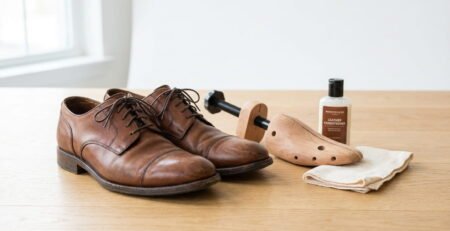
Use a Shoe Stretcher on Problem Areas
A shoe stretcher is a foot-shaped device — usually made from wood or plastic — that is inserted into the shoe and expanded to stretch the leather. For targeted problem areas like a tight toe box or narrow width, a stretcher used overnight (or for six to eight hours) can expand the leather by a half size or more in the specific area that’s causing problems. Some stretchers come with spot-stretching plugs that let you target a precise pressure point rather than stretching the whole shoe evenly.
Use Anti-Blister Protection on Vulnerable Areas
For the first several wears — especially outside the house — apply protection to the areas most likely to blister. Blister plasters or moleskin pads on the back of both heels are essential for most people in new leather shoes. A thin application of petroleum jelly or a specialist anti-chafe balm on the back of your heels and any other identified pressure points reduces friction dramatically and prevents painful blisters from forming while the leather is still stiff.
Gradually Increase Wearing Time
After the first week of short home sessions, start wearing the shoes for half-day outings — two to three hours at a time outside. After two weeks, move to full days as the leather starts to noticeably soften. By week three or four for most people, the worst of the break-in discomfort will have passed. The shoes will still be getting more comfortable — full-grain leather continues to soften and mold for several months — but the painful stage is typically over within the first month of regular wear.
Use Shoe Trees After Every Wear
After each break-in session, insert cedar shoe trees immediately. Shoe trees hold the shoe in its correct shape as the leather softens, preventing unwanted creasing or deformation while encouraging the leather to mold evenly around the foot shape. They also absorb the moisture from your foot that has built up during wear — keeping the leather healthy and speeding up the softening process by maintaining the right moisture balance inside the shoe.
Extra Methods to Speed Up the Break-In Process
The Hairdryer Method
Put on a thick pair of socks and your new leather shoes. Using a hairdryer on a medium heat setting, warm specific tight areas of the shoe — the toe box, heel, or sides — for 20 to 30 seconds while flexing your foot and moving your toes. The heat softens the leather quickly, and the movement of your foot while it’s warm helps it mold to your shape. Once you stop, keep the shoes on until they cool completely — this sets the leather in the new shape. Apply leather conditioner afterward to replace the moisture the heat removed. Use this method sparingly — repeated heat exposure dries out leather.
The Leather Conditioner Soak Method
Apply a generous coat of leather conditioner to the problem areas — especially the heel counter and toe box — and leave it to soak in for several hours before wearing. The conditioner deeply softens the leather fibers, making them significantly more pliable. Then wear the shoes with thick socks immediately after conditioning while the leather is at its most receptive. This combination of deep conditioning and immediate wear can cut the break-in timeline meaningfully.
Professional Stretching by a Cobbler
If a specific area of the shoe is causing serious discomfort that home stretching hasn’t resolved, a professional cobbler can stretch the shoe precisely using specialist tools and stretching compounds. Cobblers can widen the toe box, raise the instep, and stretch specific pressure points without distorting the rest of the shoe. This is especially useful for expensive shoes where you don’t want to risk damaging the leather with aggressive home methods.
What’s Normal — and What Means the Shoes Don’t Fit
| Symptom | Normal Break-In Pain | Wrong Fit — Consider Returning |
|---|---|---|
| Heel rubbing | Reduces after first few wears | Severe blistering even with protection |
| Toe box tightness | Eases after 1 to 2 weeks | Toes curl, go numb, or feel crushed from day one |
| Side pressure | Reduces noticeably within 20 to 30 minutes of wearing | Stays the same or worsens — no give at all |
| Ball of foot ache | Improves as sole flexes — better after 10 to 15 wears | Sharp pain from an insole seam or internal defect |
| Instep pressure | Eases as tongue softens — better within 2 weeks | Foot goes numb or circulation is visibly affected |
| General tightness | Gradual loosening over 2 to 4 weeks | No improvement after 4 weeks of regular wear |
| Vamp creasing pain | Resolves once crease lines form — within 2 weeks | Rarely a fit issue — almost always resolves itself |
What to Expect Week by Week
✔ Do This During Break-In
- Start with short home sessions before outdoor wear
- Apply leather conditioner before the very first wear
- Use heel grips or moleskin on vulnerable areas
- Wear thick socks for the first few home sessions
- Use a shoe stretcher on specific tight areas
- Insert cedar shoe trees after every wear
- Gradually increase wearing time over 3 to 4 weeks
- Stop immediately if open blisters form
✘ Never Do This During Break-In
- Wear brand-new leather shoes for a full day immediately
- Use excessive heat to force-soften the leather
- Soak the leather in water to stretch it
- Ignore pain and push through open blisters
- Assume all pain means the shoes don’t fit
- Store without shoe trees during the break-in period
- Skip conditioning — it genuinely speeds up the process
- Give up after just one or two painful wears
Frequently Asked Questions
How long does it take to break in leather shoes?
For most people wearing quality leather shoes regularly, the painful phase of break-in lasts two to four weeks. The exact timeline depends on the grade and thickness of the leather — full-grain leather shoes typically take longer to break in than top-grain or genuine leather shoes — the specific last shape and how closely it matches your foot, and how often you wear the shoes during the break-in period. Light wear once or twice a week stretches the break-in timeline significantly. Wearing the shoes three to four times per week with gradually increasing session lengths gets through the break-in period fastest.
Is it normal for leather shoes to give you blisters?
Yes — especially on the back of the heel — during the first few wears. This is one of the most common experiences with new leather shoes and doesn’t mean the shoes are defective or the wrong size. The heel counter is the stiffest part of most new leather shoes and rubs against the heel before it has had time to soften. Using heel grips, blister plasters, or anti-friction balm on the back of your heel for the first several wears prevents blisters from forming while the leather breaks in. If blistering continues after four to six weeks of regular wear, it may indicate the heel cup of the shoe is too wide or too narrow for your heel shape.
Can I speed up the leather shoe break-in process?
Yes — several methods genuinely help. Applying leather conditioner before the first wear softens the leather from the start and is the single most effective thing you can do. Wearing thick socks during early sessions gently stretches the leather in all directions simultaneously. Using a wooden shoe stretcher overnight on tight areas targets specific pressure points without distorting the rest of the shoe. The hairdryer method — warming tight areas with a hairdryer while wearing thick socks, then keeping the shoes on until they cool — can soften specific stiff spots quickly. Combining conditioner, thick socks, and regular short wearing sessions gives the fastest results without risking damage to the leather.
New leather shoes almost always cause some discomfort at first — that’s not a defect, it’s the nature of the material. The difference between a shoe that hurts because it’s breaking in and a shoe that hurts because it doesn’t fit is time. Give quality leather shoes three to four weeks of gradual, consistent wear, protect your feet in the meantime, and the payoff is a shoe that fits better than anything synthetic ever could — one that feels like it was made specifically for you.

Leave a Reply