
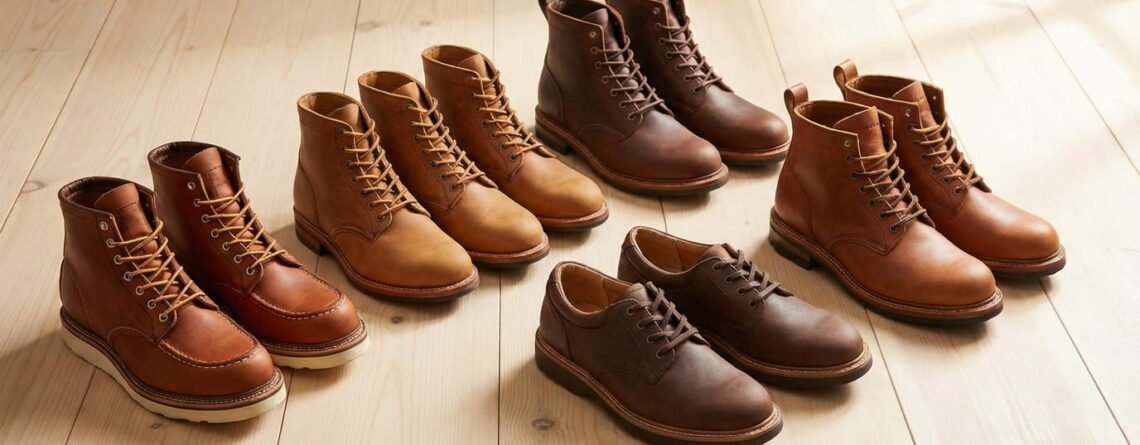
If you spend 8 or more hours a day on your feet, your shoes are not just a style choice — they directly affect your energy levels, your posture, and how your back and knees feel by the end of the shift. The right pair of leather work shoes can make a real difference. This guide explains exactly what to look for and which features matter most when comfort is non-negotiable.
Why Leather Is Still the Best Material for Work Shoes
Leather holds up better than most materials in demanding work environments. It resists scuffs, handles light moisture, and — unlike synthetic materials — breathes. That matters a lot when your feet are generating heat all day inside a shoe.
Real leather also molds slightly to the shape of your foot over time. That means a quality leather work shoe often gets more comfortable the longer you wear it, not less.
And for workplaces with dress codes — offices, restaurants, hotels, healthcare settings — leather looks professional without looking stiff or overdone.
What Makes a Leather Work Shoe Good for Standing All Day
Not every leather shoe is built for long hours on your feet. Here’s what actually separates a good work shoe from one that will leave you limping by 3pm.
Arch Support
This is the single most important feature for anyone who stands all day. Proper arch support reduces strain on your feet, knees, hips, and lower back. Without it, your foot collapses inward slightly with every step, and that adds up to serious fatigue and pain over an 8-hour shift.
Look for shoes with a firm, contoured footbed rather than a flat insole. If the shoe doesn’t have good built-in arch support, you can add an aftermarket orthotic insole — but it’s better to start with a shoe that already has it.
Cushioning
Cushioning absorbs the impact of each step and reduces pressure on the heel and ball of the foot. Memory foam, EVA foam, and gel inserts all work well. The key is that the cushioning stays responsive — cheap foam compresses and loses its effect quickly.
Midsole Stability
A stable midsole prevents your foot from rolling side to side. This is especially important if you stand on hard floors like concrete or tile. Shoes with a firm midsole keep your foot aligned and reduce muscle fatigue throughout the day.
Outsole Grip
For work environments, grip is not optional. A rubber outsole with a decent tread pattern keeps you safe on wet or slippery floors. Leather soles look great but are genuinely dangerous on smooth or wet surfaces in a work setting.
Toe Box Room
Your feet swell slightly during the day — especially after hours of standing. A shoe with a roomy toe box lets your toes sit naturally without being squeezed. Tight toe boxes cause blisters, corns, and long-term joint issues.
Heel Height and Shape
A slight heel — around half an inch to one inch — actually helps with posture and takes pressure off the ball of the foot. A completely flat shoe is not always the most comfortable option for standing all day. Avoid heels higher than 1.5 inches in a work shoe, as they shift too much weight forward.
Types of Leather Work Shoes for Men
The right style depends on where you work. Here are the most common options and who they suit best.
Leather Oxford Work Shoes
A plain or cap-toe Oxford with a rubber outsole is the go-to choice for office workers, managers, and anyone in a formal or semi-formal work environment. They look sharp, meet dress codes, and when built with comfort features, handle full-day wear well.
Leather Derby Work Shoes
Derbies have an open lacing system which makes them slightly easier to adjust for width and swelling throughout the day. A great choice for office and hospitality workers who want a professional look with a little more flexibility in fit.
Leather Chukka Boots
Chukka boots have a low ankle height — usually two or three eyelets. They look clean and professional, offer slightly more ankle support than a low-cut shoe, and work well in both office and light industrial settings.
Leather Chelsea Boots
Chelsea boots are ankle-high with elastic side panels. They’re easy to get on and off, look polished, and provide good ankle support. Well suited to professionals who are on their feet and moving around constantly — sales reps, floor managers, healthcare staff in non-clinical roles.
Safety-Toe Leather Work Shoes
For trades, warehouses, and industrial workplaces, leather shoes with a steel or composite safety toe are the right call. Many now come with comfort features like cushioned insoles and anti-fatigue midsoles. They protect your feet and still look presentable enough for most blue-collar work environments.
Key Features to Check Before You Buy
- Full-grain or top-grain leather upper: More durable and breathable than genuine leather or synthetic materials.
- Leather or moisture-wicking lining: Keeps feet drier and reduces odor over long shifts.
- Contoured footbed with arch support: Built-in support is better than relying on aftermarket insoles alone.
- EVA or rubber midsole: Absorbs impact and keeps the shoe light without sacrificing stability.
- Slip-resistant rubber outsole: Essential for wet kitchens, tiled floors, and polished surfaces.
- Removable insole: Lets you swap in a custom orthotic if you have specific foot support needs.
- Wide fit option: If your feet are on the wider side, look for brands that offer W or EE width sizes. A too-narrow shoe is painful after a full shift.
The Best Leather Types for Work Shoes
The type of leather used in the upper affects both durability and comfort. Here’s a quick breakdown:
Full-grain leather is the strongest and most breathable option. It develops a patina over time and handles daily wear better than anything else. If budget allows, this is what you want.
Top-grain leather is sanded slightly for a cleaner surface. It’s still good quality and holds up well in office or light-duty work environments. A solid choice in the mid price range.
Nubuck leather is full-grain leather that’s been buffed to create a soft, velvety surface. It looks great but requires more care to keep clean — not ideal for messy work environments.
Genuine leather is the lowest grade and won’t hold up to daily hard use. Fine for occasional wear, but not the right choice for a shoe you’re in all day, every day.
How to Get the Right Fit for All-Day Comfort
Even the best shoe won’t help if it doesn’t fit properly. Here’s how to make sure you’re getting the right fit:
Measure both feet. Most people have one foot slightly larger than the other. Always fit to the larger foot.
Check the heel. Your heel should sit snugly in the shoe without slipping. Heel slippage causes blisters and adds fatigue as your foot works to keep the shoe on.
Check the toe box. Press your thumb at the front of the shoe with your foot inside. There should be about a thumb’s width of space between your longest toe and the end of the shoe.
Walk around the store. Don’t just stand still. Walk on a hard floor, not carpet. If anything rubs or pinches in the first few minutes, it will only get worse over a full shift.
Wear your work socks. Try shoes on with the same socks you’ll wear to work. A thick cushioned sock changes the fit noticeably compared to a thin dress sock.
Top Brands Known for Comfort in Leather Work Shoes
These brands consistently get strong reviews from people who stand or walk all day for work:
- Clarks — Excellent cushioning technology and wide range of styles. One of the most trusted names for all-day comfort.
- Rockport — Built specifically around comfort engineering. Their dress shoes often include athletic-grade cushioning inside classic leather uppers.
- ECCO — Danish brand known for anatomically shaped footbeds and high-quality leather. A top pick for office professionals.
- Dansko — Popular with healthcare and hospitality workers. Known for excellent arch support and slip-resistant soles.
- Thorogood — A strong option in the work boot and safety shoe category. Made in the USA with Goodyear welt construction.
- Red Wing — Heavy-duty leather work boots and shoes built for trades and industrial use. Known for extreme durability.
- Florsheim — Classic leather dress shoes with comfort-focused updates. Good for office workers who want a formal look without sacrificing support.
How to Take Care of Leather Work Shoes
Work shoes take more punishment than any other shoe you own. A little regular care goes a long way.
Clean after every shift. Wipe off dirt, salt, or grime with a damp cloth before it dries and sets into the leather.
Condition once a week. Work shoes dry out faster than casual shoes because of the heat and friction of daily use. A leather conditioner keeps them soft and prevents cracking.
Rotate between two pairs. Wearing the same shoes every day breaks them down much faster. Rotating two pairs gives each one time to dry out and recover its shape overnight.
Use cedar shoe trees. These absorb sweat from inside the shoe and help it keep its shape. This matters even more with work shoes than casual ones.
Replace insoles when needed. The insole compresses with use and loses its cushioning effect. Swapping in a fresh insole — or a quality aftermarket one — can breathe new life into a shoe that still has plenty of leather left.
Frequently Asked Questions
Are leather shoes better than sneakers for standing all day?
It depends on the shoe, not just the material. A well-built leather work shoe with proper arch support and cushioning can be just as comfortable as a good sneaker — and in many workplaces, it’s the only appropriate option. The advantage of leather is that it breathes well, molds to your foot over time, and holds up to hard daily use better than most sneaker materials.
Should I use orthotic insoles in my leather work shoes?
If you have flat feet, high arches, plantar fasciitis, or any ongoing foot pain, a custom or over-the-counter orthotic insole can make a big difference. Look for work shoes with removable insoles so you can swap them out easily. If your foot pain is severe or ongoing, it’s worth seeing a podiatrist for a proper assessment before choosing insoles on your own.
How long should a good pair of leather work shoes last?
With daily use and proper care, a quality pair of leather work shoes should last 2 to 4 years. Full-grain leather shoes with Goodyear welt construction can last even longer because the sole can be replaced when it wears out. Cheaper genuine leather shoes worn daily may only last 12 to 18 months before the upper or sole starts to break down.
The right leather work shoe is one of the best investments you can make if you’re on your feet all day. Focus on arch support, cushioning, grip, and a proper fit — and you’ll feel the difference from the very first shift. Take care of them regularly and a good pair will carry you through years of hard work without slowing you down.

Leave a Reply