
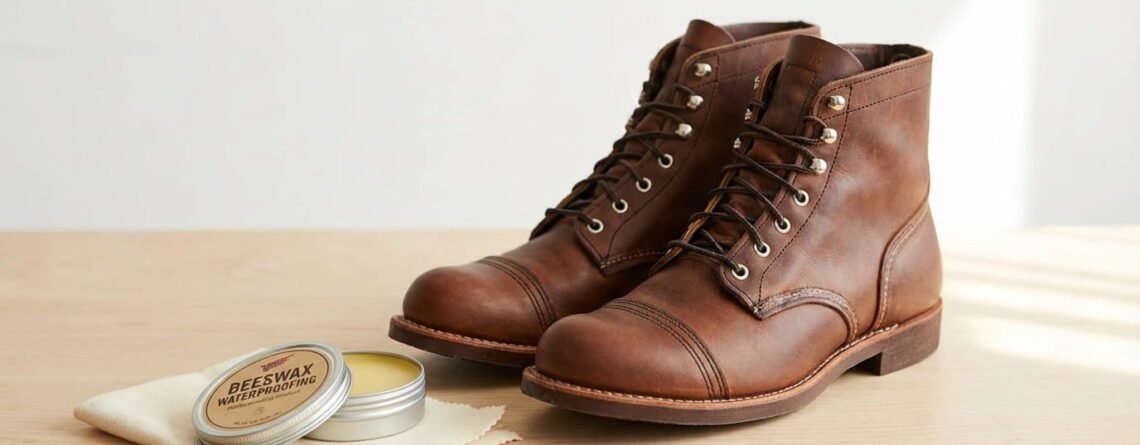
Water is one of the most common ways leather shoes get damaged — and one of the easiest to prevent. A good waterproofing treatment keeps rain, puddles, and morning dew from soaking into the leather, staining the surface, or softening the structure of the shoe. This guide covers the best products to use, the right way to apply them, and how often to reapply so your leather shoes stay protected all year round.
Does Leather Really Need Waterproofing?
Real leather — especially full-grain leather — has some natural water resistance. The tightly packed fibers and natural oils in the hide do repel light moisture to a degree. But that natural resistance is not enough to protect against heavy rain, puddles, or repeated exposure to wet conditions.
When leather absorbs too much water, several things happen. The leather swells as it soaks up moisture, then shrinks and stiffens as it dries — causing cracking. Salt from rain or road spray leaves white tide marks on the surface. And repeated wetting without treatment gradually strips the natural oils from the leather, making it brittle over time.
A waterproofing treatment adds a protective barrier that keeps water on the surface — where it beads up and runs off — instead of soaking into the leather beneath.
The Best Waterproofing Methods for Leather Shoes
1. Wax-Based Waterproofing Products
⭐ Best OverallWax-based products — like beeswax cream, dubbin, or conditioning wax — are the most traditional and most effective way to waterproof leather shoes. The wax penetrates the leather fibers and fills the pores, creating a barrier that repels water while still conditioning the leather at the same time.
Beeswax-based products are especially popular because they condition and waterproof simultaneously, are gentle on leather, and don’t significantly affect breathability. They do slightly darken leather — which is worth knowing before applying to lighter-colored shoes. Always test on a hidden area first.
Best for: Full-grain leather boots, work boots, casual leather shoes, and any footwear exposed to heavy wet conditions.
2. Waterproofing Spray
🔵 Most ConvenientWaterproofing sprays — usually silicone-based or fluoropolymer-based — are the easiest and fastest option. You spray an even coat over the clean, dry shoe, let it dry, and you’re done. They’re widely available, work on almost all leather types, and dry clear without darkening the leather.
The tradeoff is that sprays don’t last as long as wax treatments and don’t condition the leather at the same time. They sit on the surface rather than penetrating the fibers, so they need to be reapplied more frequently — typically every 2 to 4 weeks with regular wear.
Best for: Dress shoes, suede, nubuck, lighter-colored leather where darkening is a concern, and quick top-up protection between wax treatments.
3. Dubbin
⭐ Best for Heavy-Duty UseDubbin is a traditional leather treatment made from natural wax, tallow (animal fat), and fish oil. It’s been used for centuries on boots, saddles, and heavy leather work gear. Dubbin deeply conditions and waterproofs leather at the same time, making it extremely effective for shoes exposed to tough outdoor conditions.
It does darken leather noticeably and makes the surface quite matte — so it’s not ideal for polished dress shoes. But for leather boots, hiking shoes, or work footwear where durability and protection matter more than appearance, dubbin is hard to beat.
Best for: Leather boots, outdoor footwear, work boots, and any leather that needs maximum conditioning alongside strong water protection.
4. Leather Conditioner With Water-Repelling Properties
🔵 Good All-RounderMany modern leather conditioners include water-repelling agents built into the formula. These are a good middle-ground option — they condition the leather, add a degree of water resistance, and are gentle enough for regular use on all leather types including dress shoes. They won’t provide the same level of protection as a dedicated wax or spray treatment in heavy rain, but for everyday use in mixed weather they work very well.
Best for: Regular everyday leather shoes and dress shoes that need conditioning and moderate water resistance combined.
5. Mink Oil
🔵 Traditional OptionMink oil is a natural product derived from the fat of mink pelts. It’s been used as a leather conditioner and mild waterproofer for generations. It softens and conditions leather well and adds a degree of water resistance. Like wax products, it does darken leather — sometimes significantly — and can soften the structure of the leather over time with repeated use, which may not be ideal for structured dress shoes.
Best for: Casual leather shoes and boots where softness and conditioning are priorities. Use sparingly and less frequently than modern conditioners.
6. Petroleum Jelly (Home Remedy)
🟢 Budget OptionIn a pinch, petroleum jelly can provide temporary water resistance. It sits on the leather surface and repels water reasonably well for short periods. Apply a thin layer with a cloth, buff off the excess, and it gives some protection in light rain. However, it attracts dust and grime, can go rancid inside the leather over time, and is no substitute for a proper waterproofing product. Use it only when nothing else is available.
Best for: Emergency temporary protection only. Not a long-term solution.
How to Waterproof Leather Shoes — Step by Step
Start With Clean, Dry Shoes
Waterproofing works best on clean leather. Any dirt, salt, or old polish residue sitting on the surface will prevent the treatment from bonding properly with the leather. Clean your shoes thoroughly and let them dry completely at room temperature before applying any waterproofing product. Applying treatment to damp leather traps moisture inside — exactly the opposite of what you want.
Test on a Hidden Area First
Before applying any waterproofing product to the entire shoe, test it on a small hidden area — like the inside edge of the heel or underneath the tongue. This lets you check how the product affects the leather’s color and finish before committing to the full shoe. Wax-based products and mink oil can darken leather, sometimes significantly. A 60-second test saves a lot of regret.
Apply the Waterproofing Product
For wax-based products and dubbin: apply a small amount with a clean cloth using circular motions, working it evenly into the entire leather upper — including the seams and welt, which are common entry points for water. Don’t forget the tongue and around the lace eyelets.
For waterproofing sprays: hold the can 20 to 30 centimeters (8 to 12 inches) from the shoe and apply an even, sweeping coat across the entire surface. Don’t saturate one spot — keep the can moving for an even application. Apply in a well-ventilated area and avoid inhaling the spray.
Pay Extra Attention to Seams and the Welt
The seams where different panels of leather meet, and the welt (the strip connecting the upper to the sole), are the weakest points in a shoe’s water resistance. Water finds gaps in stitching and seams before it finds its way through solid leather. Work extra product into these areas with your fingers or a cloth to make sure they’re fully covered and protected.
Let It Absorb and Dry Fully
After applying the treatment, let the shoes sit and absorb the product for at least 15 to 30 minutes. For wax-based products, a longer absorption time of an hour or more gives better results. Keep the shoes away from heat during this time — let them dry naturally at room temperature. Rushing the drying process with a hairdryer or radiator defeats the purpose by driving the product to the surface before it can penetrate the leather properly.
Buff Off Any Excess
Once the product has absorbed, use a clean dry cloth to buff off any excess residue. With wax products, this also helps work the treatment further into the surface. With spray products, a light buff with a soft cloth after drying gives a neater finish. For dress shoes, follow up with your regular shoe polish to restore the shine — waterproofing products, especially wax-based ones, can leave the surface looking slightly dull or matte.
Apply a Second Coat for Maximum Protection
For shoes that will face genuinely wet conditions — heavy rain, snow, or outdoor use — apply a second thin coat after the first has fully dried. Two thin coats always outperform one heavy coat. The first coat prepares the leather and starts filling the pores. The second coat builds on top of that foundation for a much stronger protective barrier.
Waterproofing by Leather Type
Smooth Leather (Full-Grain, Top-Grain)
Use wax-based products, dubbin, or waterproofing spray. Wax gives the best protection and conditioning combined. Follow up with polish to maintain the finish. Reapply every 4 to 6 weeks with regular wear, or immediately after heavy rain.
Suede and Nubuck
Use only a suede-specific waterproofing spray — never wax, oil, or dubbin. These will flatten the nap and permanently stain the texture. Apply the spray to clean, dry suede before the first wear, and reapply every 2 to 3 weeks for shoes worn in wet conditions. Brush the suede gently with a suede brush after the spray dries to restore the nap.
Patent Leather
Patent leather’s hard lacquer coating is already fairly water-resistant on its own. A light application of a silicone-based spray adds extra protection without affecting the glossy finish. Avoid wax-based products — they can cloud the patent surface rather than protect it.
Leather Boots
Boots face the toughest conditions and benefit most from wax-based products or dubbin. Pay special attention to the seams, the area around the ankle opening, and the welt — these are the most likely entry points for water in boots. For work boots and hiking boots, dubbin or a heavy beeswax product gives the strongest long-term protection.
How Often Should You Reapply Waterproofing?
| Product Type | Typical Protection Duration | Reapply When |
|---|---|---|
| Wax-based cream | 4 to 8 weeks with regular wear | Water stops beading on the surface |
| Waterproofing spray | 2 to 4 weeks with regular wear | After every few wears in wet conditions |
| Dubbin | 6 to 10 weeks | Leather starts to look dry or dull |
| Conditioner with repellent | 3 to 5 weeks | After cleaning or heavy rain exposure |
| Mink oil | 4 to 6 weeks | Leather begins to feel stiff or dry |
What to Do If Your Leather Shoes Get Soaked
Even well-treated shoes can get completely soaked in a heavy downpour. Here’s how to handle it correctly:
- Remove the laces and insert shoe trees immediately to hold the shape as the leather dries
- Stuff with newspaper if you don’t have shoe trees — change the newspaper every hour as it absorbs moisture
- Let the shoes dry slowly at room temperature — never near a radiator, heater, or in direct sunlight
- Once fully dry — which can take 24 hours or more for thoroughly soaked shoes — apply a generous coat of leather conditioner to replace the oils lost during the soaking and drying process
- Follow with your waterproofing treatment of choice to restore the protective barrier
- Finish with a polish to restore color and shine
Frequently Asked Questions
Will waterproofing change the look or color of my leather shoes?
It depends on the product. Wax-based treatments and dubbin will darken leather — sometimes noticeably, especially on lighter colors like tan or cognac. The darkening is usually temporary as the product absorbs, but some residual darkening can remain. Waterproofing sprays are designed to dry clear and have minimal effect on color. Always test any product on a small hidden area of the shoe before full application, and check the product label for guidance on color impact before buying.
Can I waterproof leather shoes with just regular shoe polish?
Regular wax shoe polish does provide a small degree of water resistance — the wax layer on the surface helps repel light splashes. But it’s not enough on its own for genuine wet-weather protection. A dedicated waterproofing treatment penetrates deeper into the leather and provides significantly stronger protection than polish alone. Use both together for the best result — waterproofing treatment first, then polish on top for shine and added surface protection.
How do I remove waterproofing product if I applied too much?
If you’ve applied too much wax-based product and the shoe looks greasy or heavily darkened, let it absorb fully for a few hours, then buff vigorously with a clean dry cloth. Most excess will come off with firm buffing. For spray products, a light wipe with a barely damp cloth followed by air drying usually removes surface excess. If the leather has darkened more than you’d like from a wax product, it will typically lighten slightly over the next few days of wear as the wax works deeper into the leather fiber.
Waterproofing your leather shoes takes less than ten minutes and makes a genuine difference to how long they last and how good they look. Treat new shoes before their first wear, reapply regularly, and handle wet shoes the right way — and rain will never be a problem for your leather footwear again.


Leave a Reply