
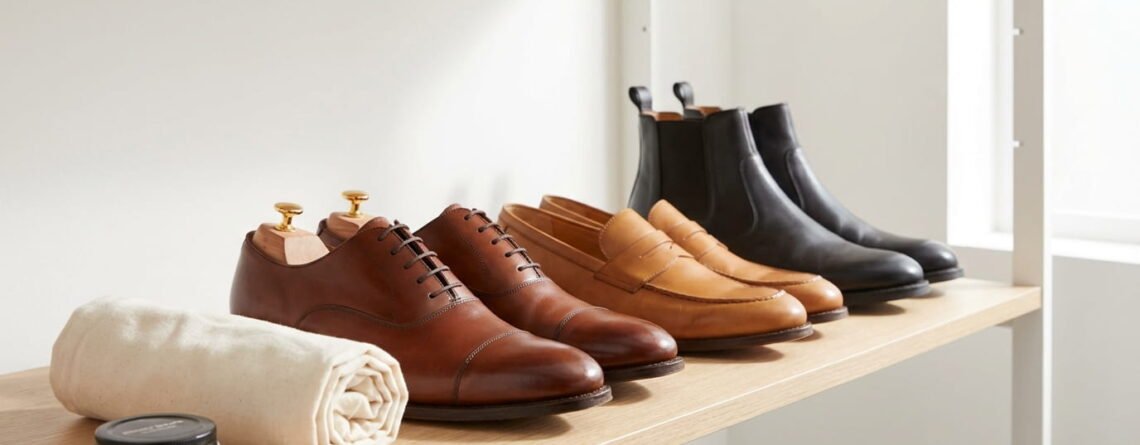
Most people spend good money on leather shoes — and then store them in ways that quietly destroy them. Tossed in a pile, left in a damp cupboard, or stuffed in a bag without a second thought. The truth is, how you store your leather shoes matters almost as much as how you clean and polish them. Get storage right and your shoes can last decades. Get it wrong and they’ll crack, warp, and fade in just a few years.
Why Storage Has Such a Big Impact on Leather
Leather is a natural material. It reacts to its environment — absorbing and releasing moisture, softening in warmth, stiffening in cold, and fading in direct light. Left in the wrong conditions, even a high-quality pair of full-grain leather shoes will deteriorate faster than a cheap synthetic pair stored well.
The three biggest enemies of stored leather shoes are:
- Moisture: Too much leads to mold and mildew. Too little dries the leather out and causes cracking.
- Heat and direct sunlight: Both dry out the leather rapidly and fade the color.
- Loss of shape: Shoes stored without support collapse inward, crease permanently, and lose their structure over time.
Every storage tip in this guide addresses at least one of these three problems.
Rule 1: Always Clean and Condition Before Storing
Never Put Dirty Shoes Into Storage
Dirt, salt, and moisture left on leather don’t just sit there — they keep working on the material. Salt from sweat or rain draws moisture out of the leather from the inside. Dirt particles gradually abrade the surface. If you store shoes without cleaning them first, you’re essentially letting damage continue in a dark cupboard where you can’t see it happening.
Before any shoe goes into storage — even just overnight — wipe it down with a dry cloth to remove surface dust and dirt. For longer storage periods of a month or more, do a full clean and apply leather conditioner before putting them away. This keeps the leather nourished while it sits unused.
Rule 2: Use Shoe Trees Every Single Time
Shoe Trees Are Not Optional
A shoe tree is a foot-shaped insert — usually made from cedar wood or plastic — that sits inside the shoe when it’s not being worn. It holds the shoe in its correct shape, prevents the toe box from collapsing, and stops the heel counter from folding inward.
Without a shoe tree, leather shoes crease and collapse under their own weight over time. These creases become permanent. The heel stiffener softens and folds. The toe box flattens. None of this is reversible without professional intervention — and some of it is not reversible at all.
Cedar shoe trees have an added benefit: cedar wood naturally absorbs moisture and odor from inside the shoe, keeping the interior fresh and dry between wears. They are worth every penny and should go into every pair of leather shoes the moment you take them off.
Rule 3: Store in a Cool, Dry, Dark Place
The Right Environment Makes a Huge Difference
The ideal storage environment for leather shoes is cool, dry, and away from direct light. A wardrobe or closet at room temperature — roughly 15°C to 20°C (60°F to 68°F) — is perfect. Avoid these common storage mistakes:
Near a radiator or heating vent: Heat dries leather out rapidly. Shoes stored near a heat source will crack and stiffen noticeably faster than shoes kept at room temperature.
In direct sunlight: UV light fades leather color and dries out the surface oils. Even a few months near a sunny window can visibly fade a dark shoe.
In a damp basement or bathroom: High humidity encourages mold and mildew growth on leather, which is difficult and sometimes impossible to fully remove.
In a sealed plastic box without ventilation: Leather needs to breathe. A sealed plastic container traps moisture and creates exactly the humid, stale conditions that cause mold and deterioration.
Rule 4: Use Dust Bags or Breathable Boxes
Protect the Surface Without Suffocating the Leather
Dust is a slow but real problem for stored leather. It settles into the grain, dulls the surface, and attracts moisture. Keeping shoes covered protects them from dust without trapping the moisture that damages them.
The best options for covering stored leather shoes are:
Cloth or flannel dust bags: These are the gold standard. Many quality shoes come with their own dust bags. If yours didn’t, cotton pillowcases work perfectly as a substitute. Breathable, soft, and dust-blocking.
Original shoe boxes: Cardboard is breathable and keeps shoes protected. Store the box with the lid slightly ajar if the storage environment is at all humid — this allows a little airflow while still keeping dust out.
Clear shoe boxes with ventilation holes: These let you see which shoes are inside without opening every box, and the holes allow air circulation. A practical option for larger shoe collections.
Rule 5: Rotate Your Shoes Regularly
Give Each Pair Time to Rest and Recover
Leather absorbs sweat and moisture during wear. A shoe worn day after day never gets a chance to fully dry out — the moisture builds up inside the leather, softening it, weakening the structure, and eventually causing the material to break down faster.
Professional shoe care advice consistently recommends resting leather shoes for at least 24 hours between wears. This gives the moisture from your foot time to evaporate fully from the leather and insole. Shoe trees speed up this process by holding the shoe open and absorbing moisture from inside.
If you wear dress shoes five days a week, owning two or three pairs and rotating between them isn’t extravagance — it’s the most cost-effective way to make each pair last significantly longer.
Rule 6: Control Moisture With Cedar and Silica
Manage Humidity in Your Storage Space
If your storage space tends to be humid — common in older homes, basements, or seasonal storage — take active steps to control moisture around your shoes.
Cedar shoe trees do double duty: they hold shoe shape and absorb interior moisture. Cedar blocks or sachets placed on the shelf near your shoes help manage ambient humidity in the storage area too.
Silica gel packets — the small packets often found in new shoe boxes — are excellent moisture absorbers. Keep a few in your shoe storage area. Once saturated they can be dried out in an oven on low heat and reused. Place them inside shoe boxes but never directly touching the leather.
If your storage area is very humid, a small dehumidifier placed nearby makes a noticeable difference — not just for shoes but for everything leather stored in that space.
Storing Leather Shoes Long-Term (Seasonal Storage)
Putting a pair of shoes away for an entire season — winter boots in summer, or dress shoes during a long trip — needs a little extra preparation.
Before Long-Term Storage
Do a full clean to remove all dirt, salt, and surface grime. Apply a generous coat of leather conditioner and let it absorb fully — this keeps the leather nourished during the long period of inactivity. Follow with a coat of wax polish for an extra layer of protection. Insert cedar shoe trees and place the shoes in breathable dust bags or the original boxes with the lids slightly open.
During Long-Term Storage
Check on stored shoes every four to six weeks if possible. Look for any signs of mold — a white or greenish dusty film on the surface — and for dryness or cracking. A very quick wipe and a small amount of conditioner applied every couple of months during long storage keeps the leather in good condition. Don’t just put them away and forget about them entirely.
When Taking Them Out of Storage
Before wearing shoes that have been stored for months, clean them thoroughly, apply a fresh coat of conditioner, and polish them properly. Leather that has been sitting unused benefits from being fed and refreshed before it goes back to work. Check the soles and welt for any cracking or separation that may have occurred during storage and address those issues before wearing.
Quick Reference — Storage Dos and Don’ts
✔ Always Do This
- Clean shoes before storing
- Insert cedar shoe trees after every wear
- Store in a cool, dry, dark location
- Use breathable dust bags or open boxes
- Rotate between pairs — rest shoes 24 hours between wears
- Condition leather before long-term storage
- Use silica gel or cedar to manage humidity
- Check stored shoes every 4 to 6 weeks
✘ Never Do This
- Store dirty or damp shoes
- Leave shoes without shape support
- Store near radiators or in direct sunlight
- Use sealed plastic bags or airtight containers
- Wear the same pair every day without rest
- Store in damp basements or bathrooms
- Stack shoes on top of each other without protection
- Ignore shoes during long storage periods
Frequently Asked Questions
Can I store leather shoes in their original box long-term?
Yes — original shoe boxes are a good storage option because cardboard is breathable and the box protects the shoe from dust and light. For short-term storage, simply place the shoes in the box with shoe trees inside and close the lid. For storage longer than a few months, leave the lid slightly ajar to allow some airflow, and add a silica gel packet inside the box to manage moisture. Avoid stacking heavy items on top of shoe boxes, as the weight can distort the shoes inside over time.
How do I stop leather shoes from getting moldy in storage?
Mold on leather shoes is caused by moisture combined with poor airflow. To prevent it, always store clean and fully dry shoes in a breathable container — never a sealed plastic bag or airtight box. Place cedar shoe trees inside to absorb interior moisture, and keep silica gel packets near the shoes to manage humidity in the surrounding area. If your storage space is naturally damp, a small dehumidifier makes a significant difference. If mold does appear, wipe it off immediately with a cloth dampened with a small amount of white vinegar, let the shoe dry fully, then condition and polish.
Is it okay to store leather shoes in a garage or attic?
Generally, no. Garages and attics are among the worst places to store leather shoes. Both tend to experience large swings in temperature and humidity — very hot and dry in summer, cold and damp in winter. These extreme fluctuations cause leather to expand and contract repeatedly, which accelerates cracking and deterioration. If indoor closet space is limited, a climate-controlled storage unit is a much better option than a garage or attic for valuable leather footwear.
Storing leather shoes well doesn’t require expensive equipment or a lot of effort — just a few consistent habits. Clean them before they go away, support their shape with shoe trees, keep them in a breathable and stable environment, and check on them occasionally during long storage. Follow these simple rules and your leather shoes will come out of storage looking just as good as the day they went in — year after year.

Leave a Reply