
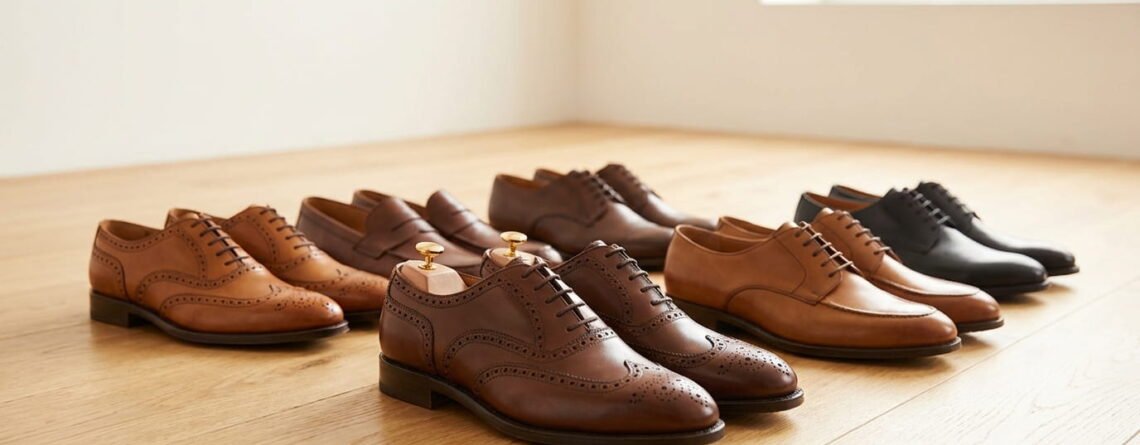
It’s one of the most common questions about leather shoes — and one of the hardest to answer with a single number. How much you should spend depends on how often you wear dress shoes, what you need them for, and how long you want them to last. This guide breaks it all down honestly, so you can make a smart decision that fits both your feet and your budget.
Why Price Matters More With Leather Shoes Than Most Things
With a lot of products, spending more doesn’t always mean getting more. With leather shoes, it genuinely does — up to a point. The difference between a $60 pair and a $250 pair of leather shoes is not just a brand name. It’s the grade of leather, the quality of construction, how long the shoes will last, and how comfortable they become over time.
That said, spending more than you need to for your situation is also a mistake. Someone who wears dress shoes twice a month doesn’t need the same shoe as someone wearing them five days a week. Getting the right value for your actual use case is the real goal.
The Four Price Tiers of Leather Shoes — What You Actually Get
Tier 1 — Entry Level
Under $80 / Under £65 / Under €75At this price point, you’re almost certainly getting genuine leather at best — and more likely corrected-grain leather, bonded leather, or synthetic materials marketed as leather. The construction is usually cemented (glued) rather than stitched, which means the sole cannot be replaced when it wears out. The upper will show wear quickly, the lining is often thin synthetic fabric, and the leather — if real — is the lowest grade available.
These shoes can look presentable for a short time. But under regular wear, most will show visible deterioration — peeling, creasing heavily, or losing their shape — within 12 to 18 months. They’re fine for a one-off occasion where you won’t wear the shoes again, but a poor investment for regular use.
Best for: One-time events, very occasional wear, or situations where appearance matters briefly and longevity doesn’t.
Tier 2 — Mid Range
$80 to $200 / £65 to £160 / €75 to €185This is where real value starts to appear. In this range you’ll find shoes made from genuine leather or top-grain leather, with better construction — often Blake stitched or cemented with higher-quality adhesives — and more durable leather soles or quality rubber outsoles. The lining is usually leather or quality fabric, and the shoes are built to last 3 to 7 years with regular wear and basic care.
Brands in this tier typically produce shoes that look sharp, break in reasonably well, and hold up under daily office wear. They won’t develop the same rich patina as full-grain leather shoes, and they may not be resoleable — but they offer a solid balance of quality and price for most everyday needs.
Best for: Occasional to regular office wear, smart-casual shoes, first proper leather shoes, and anyone who wants clear quality without a large upfront spend.
Tier 3 — Premium
$200 to $600 / £160 to £480 / €185 to €550This is the sweet spot for anyone who wears leather shoes regularly. In this range you’ll find full-grain leather uppers, leather insoles, and quality construction methods like Goodyear welting or Norwegian welting — both of which allow the shoes to be resoled multiple times. These shoes will last 10 to 20 years with proper care, develop a beautiful patina, and become noticeably more comfortable the more you wear them as they mold to your foot.
Brands in this tier include both heritage makers and newer direct-to-consumer companies that have cut out retail markup. The difference between the bottom and top of this range is often about brand prestige and where the shoe is made — both $220 and $550 shoes in this tier can be built to similarly high standards. Research the specific construction details rather than just the price tag.
Best for: Regular daily wear, professional environments, anyone who wants shoes that last a decade or more, and buyers who understand cost-per-wear value.
Tier 4 — Luxury and Bespoke
$600 and above / £480+ / €550+At this level you’re paying for exceptional materials — shell cordovan, exotic leathers, or the finest calf leather — combined with handcrafted construction by skilled artisans. Many shoes in this tier are made-to-order or bespoke, meaning they’re built specifically for your foot measurements. The last (the foot mold used to shape the shoe) is often kept on file so future pairs fit identically.
The quality difference between a $400 shoe and a $1,200 shoe is real but incremental — you’re getting refinement rather than a dramatic leap in durability. For most people, Tier 3 delivers everything they practically need. Tier 4 is for those who treat shoes as a genuine passion or long-term investment, or who require a truly custom fit.
Best for: Serious shoe enthusiasts, those requiring bespoke fit, collectors, and anyone buying a truly lifelong pair.
The Cost-Per-Wear Calculation — The Honest Way to Think About Price
The sticker price of a shoe tells you very little about its actual value. A much more useful number is cost per wear — how much each time you put on the shoes actually costs you over the shoe’s lifetime.
| Shoe Type | Purchase Price | Estimated Lifespan | Wears Per Year | Cost Per Wear |
|---|---|---|---|---|
| Entry-level synthetic | $70 | 1–2 years | 100 | ~$0.47 |
| Mid-range genuine leather | $150 | 4–5 years | 120 | ~$0.25 |
| Premium top-grain leather | $300 | 8–10 years | 150 | ~$0.22 |
| Premium full-grain leather | $450 | 15–20 years | 150 | ~$0.17 |
| Luxury / Goodyear welted | $700 | 20–25+ years | 150 | ~$0.20 |
The numbers make the case clearly. A $70 shoe worn for a year costs nearly three times as much per wear as a $450 full-grain leather shoe worn for 15 years. The cheaper shoe also requires replacement shopping, time, and hassle multiple times over that same period.
What Factors Should Influence How Much You Spend?
How Often Will You Wear Them?
This is the single most important factor. If you wear leather shoes five days a week, the cost-per-wear math strongly favors spending more upfront on premium leather. If you wear them twice a month for occasional dinners or meetings, a solid mid-range shoe makes more sense. Match your spending to your actual usage pattern — not to what you hope your usage will be.
What Will You Wear Them For?
Formal dress shoes worn to high-stakes professional environments are worth investing more in — they’re part of your presentation and they’re used constantly. Casual leather shoes worn on weekends have lower stakes. Work boots used outdoors need toughness over elegance. Think about the specific job each pair needs to do before setting a budget for it.
Do You Want to Resole Them?
If longevity matters to you and you want to be able to resole your shoes when the soles wear out, you need to spend enough to get into Goodyear welted or Blake stitched construction — which typically means Tier 3 pricing. Shoes below that price point are almost always cemented construction and cannot be resoled economically.
Are You Buying One Pair or Building a Rotation?
One premium pair worn every day will wear out faster than three mid-range pairs rotated through the week — because leather needs at least 24 hours to dry out and recover between wears. If your budget is limited, three solid mid-range pairs rotated properly will often outlast and outperform one expensive pair worn daily without rest. Budget for rotation, not just quality.
Are You New to Leather Shoes?
If you’ve never owned quality leather shoes before, starting at the very top of the premium tier before you understand your preferences — width, last shape, toe style — can be a costly mistake. Many experienced shoe buyers recommend starting in the mid-to-lower premium range, learning what fits and suits you, and then investing more confidently once you know exactly what you want.
Where You Buy Matters as Much as How Much You Spend
The same $300 can buy you very different shoes depending on where you spend it. A $300 shoe from a heritage brand with transparent construction details and a track record of quality is a very different purchase from a $300 shoe from an unknown brand with vague materials labeling and limited reviews.
Retail markup also plays a significant role. Shoes sold through traditional retail chains carry the cost of store rent, staff, and retailer margin — meaning a significant portion of what you pay doesn’t go toward the shoe itself. Direct-to-consumer leather shoe brands — those that sell directly through their own website — often deliver noticeably better construction at the same price point because they’ve cut out the middleman.
When It Makes Sense to Spend Less
Spending more isn’t always the right answer. There are situations where a lower-priced shoe is the smarter choice:
- You’re still growing or your shoe size is likely to change
- You need shoes for a single event you won’t repeat
- You’re buying shoes for a job where they’ll be exposed to chemicals, extreme conditions, or guaranteed heavy damage
- You genuinely don’t know your preferred fit, style, or last shape yet and want to experiment first
- Your budget is genuinely tight right now — a decent mid-range shoe properly cared for beats an expensive shoe you can’t afford to maintain
When It Makes Sense to Spend More
- You wear leather shoes four or more days per week
- You work in an environment where your appearance and footwear are noticed and matter
- You want shoes that improve with age and last a decade or more
- You’ve worn mid-range shoes and found yourself replacing them every couple of years
- You want to buy once, maintain well, and never think about replacing them
The Simple Rule of Thumb
Spend as much as makes sense for how often and where you’ll wear the shoes — then buy the best construction and leather grade available at that budget. For regular wearers, that almost always means stretching into the $200 to $400 range. For occasional wearers, $100 to $200 spent wisely on a known brand with clear materials labeling is more than enough. The right shoe is the one that fits your foot, your wardrobe, and your actual lifestyle — not just your aspirations.
Frequently Asked Questions
Is it worth spending $300 or more on leather shoes?
For regular wearers, yes — clearly. A $300 pair of full-grain leather shoes with quality stitched construction will typically last 10 to 15 years with proper care. Over that period, the cost per wear drops to well under $0.25 per use — far cheaper than replacing lower-priced shoes every year or two. The shoes also become more comfortable over time as the leather molds to your foot, and they can be resoled rather than replaced when the soles wear out. For someone wearing dress shoes four or more days a week, $300 to $400 is not an extravagance — it’s the most economical long-term choice.
What is the minimum I should spend to get real leather shoes?
Real leather shoes — made from genuine leather rather than synthetic materials — can be found from around $80 to $100 from reputable brands. At that price you’re getting genuine leather but the lowest grade, with cemented construction that can’t be resoled. To get top-grain leather with quality stitched construction that will last several years, plan to spend at least $150 to $200. Below $80, the chance of getting real leather in a shoe with durable construction drops significantly — regardless of what the listing claims.
Do expensive leather shoes actually feel more comfortable?
Not necessarily on day one — but very much so over time. Premium full-grain leather shoes often feel stiffer than cheaper shoes out of the box because the leather is denser and hasn’t broken in yet. After two to four weeks of regular wear, that same leather softens and molds precisely to your foot shape in a way that lower-grade leather and synthetic materials simply don’t. Many people who switch from mid-range to premium leather shoes say the comfort difference after break-in is significant — the shoe feels custom-fitted in a way that cheaper options never achieve.
The right amount to spend on leather shoes is whatever gets you into genuine leather with solid construction for the way you actually live and work. Spend too little and you’ll be replacing shoes constantly. Spend more than your usage justifies and you’ve tied up money unnecessarily. Hit that middle ground — and then take care of what you buy — and a good pair of leather shoes will serve you better and longer than almost anything else in your wardrobe.

Leave a Reply